
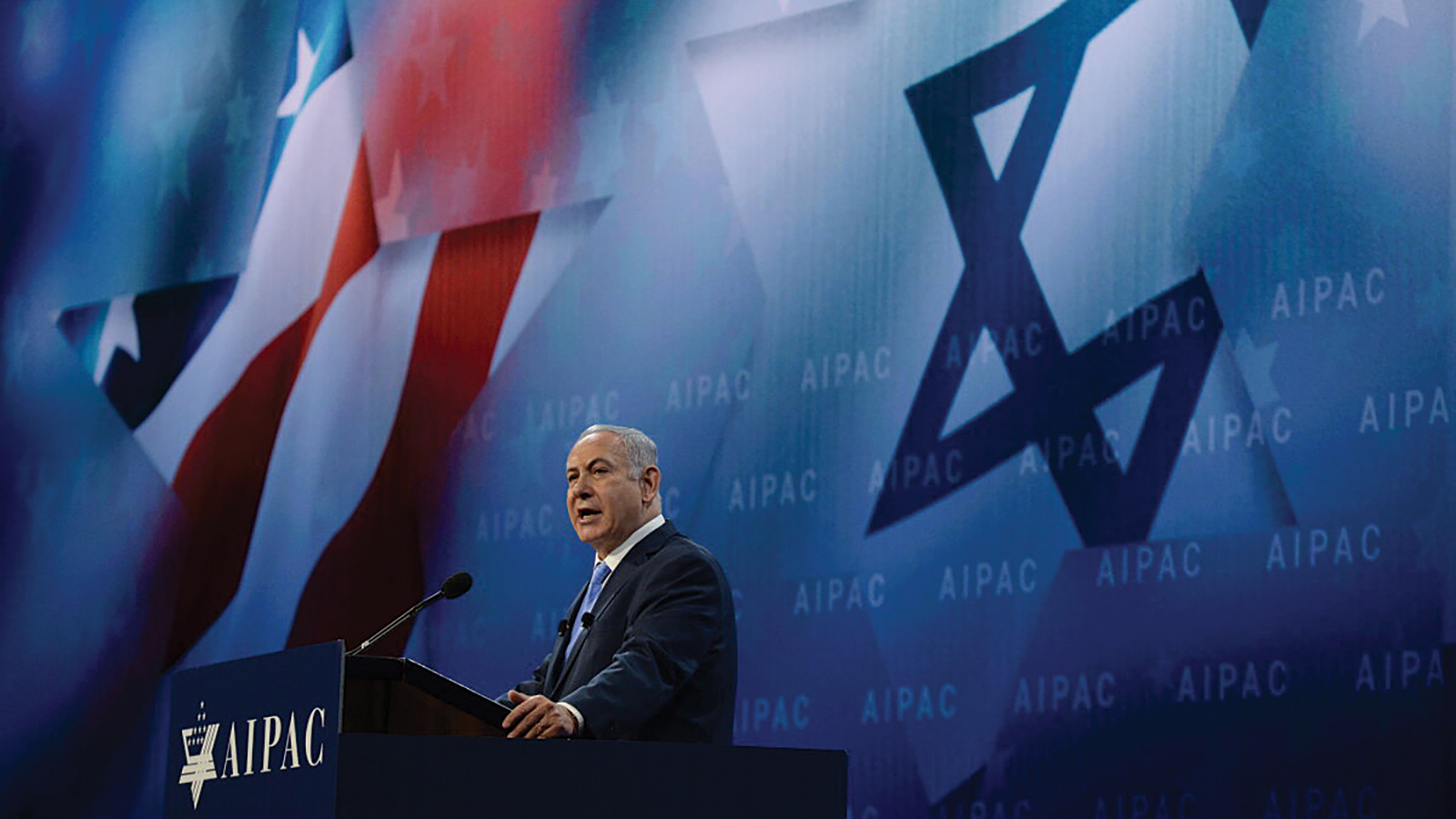
It’s far too early to determine who are the winners in the midterm congressional election. But it’s incontrovertible who one of the losers is: the American Israel Public Affairs Committee.
The group, known as AIPAC, was for many years one of the most formidable players in Washington politics. Its defense of Israeli politics, and its opposition to major arms sales to Israel’s opponents, was powerful, often leading to policy victories. Its lobbyists were not only influential, they also were greatly respected and, in some cases, they were so much a part of the capital establishment that the term “beloved” was not a stretch.
But the shimmer began to recede once the group veered from providing information to providing endorsements and financial assistance.
AIPAC’s leaders had been known for having a genius for illuminating issues, or at least for casting a positive light on Israeli policy. But more recently, it made a dangerous, and ultimately injurious, transition. It became an issue itself.
And so, last week, the group made a strategic retreat, getting out of specific congressional races and urging its supporters to make those decisions, and those contributions, on their own. “Endorsements, direct PAC contributions, and earmarking,” the group’s leadership wrote in a letter to supporters, “will no longer be part of our approach so we can expand individual giving and utilize new tools to help our friends win.”
The episode brought to mind the warning from Winston Churchill amid the World War II cheers over the success of the withdrawal of British troops from Dunkirk. “Wars,” he said soberly, “are not won by evacuations.”
This particular evacuation came after large numbers of Democrats – until recently the principal beneficiaries of AIPAC support – refused to accept the group’s contributions. Locally, Rep. Seth Moulton of Salem made that decision in his unsuccessful bid to win the Democratic Senate nomination. But he was not alone.
Three prominent Democratic figures, Sens. Cory Booker of New Jersey and Ruben Gallego of Arizona and California Gov. Gavin Newsom, did the same. And in Michigan, where AIPAC was unsuccessful in defeating Abdul El-Sayed for the Democratic Senate nomination, his eventual general-election rival, GOP Rep. Mike Rogers, thought long and hard before accepting AIPAC money.
That decision, made quietly, came just as AIPAC was stepping away from making contributions – and when Rogers was in serious peril. But it didn’t stay quiet, or unanswered, for long. Sen. Bernie Sanders called AIPAC’s move “outrageous,” rushed $1 million to the El-Sayed camp in direct response to AIPAC, and recruited a dozen other prominent Democrats to chip in an additional $300,000. AIPAC responded by attacking what it called Sanders’ “obsessive scapegoating.”
One sentence alone in the Times of Israel speaks volumes about the circumstances the group’s leaders faced: “AIPAC’s brand has become so toxic in Democratic circles that candidates in primaries have routinely accused one another of being tied to the lobby.”
In readjusting its role and commitments, the group said it had “helped 290 pro-Israel candidates win their elections and helped defeat 29 detractors,” adding, “We achieved important victories, suffered hard-fought losses, and demonstrated the conviction of our community in one of the most challenging environments in recent memory.”
There are many questions yet unanswered, principally what the group means when saying that it intended to maintain its so-called Super PAC known as the United Democracy Project, which accounted for more than $110 million in contributions in this set of contests. In the wake of the dramatic AIPAC announcement, Jeremy Ben-Ami, president of J Street, the group’s rival in Washington, said in a social-media posting that by preserving its Super PAC “while abandoning its own PAC only doubles down on the dark money politics that helped create its problem in the first place.”
The vital question that lingers: Was this a tactical retreat shrouded in the fog of war – a PR move more than a substantive one – because the Super PAC endures? (Tentative answer: Probably.)
Nor is it clear what the nature of Jewish lobbying will be now that AIPAC has stepped back, perhaps more symbolically than actually, from its most visible contemporary role. (Tentative answer: No one knows.)
AIPAC has been engaged in an armed truce with J Street, the more progressive entity in this category. But the truce broke into a full-scale range war this fall, when J Street began contributing to candidates who opposed AIPAC-backed contenders.
These tensions at the summit of Jewish influence in Washington led two prominent Massachusetts figures, Alan Solomont (onetime head of J Street) and Steven Grossman (onetime head of AIPAC) to write an op-ed in The Boston Globe pleading for a ceasefire. “Beneath the noise and polarization,” wrote the two, both still members of the boards of the warring groups, “there remains a broad center of shared values and shared aspirations about Israel, Judaism, and the future relationship between the two.”

Historically, AIPAC’s impact largely grew out of keeping score on lawmakers’ views, publicizing those records, and sowing goodwill for Israel on Capitol Hill – activities in which the group was unusually successful, prompting envy and admiration from other special interests.
Those practices were fundamentally different from writing checks to candidates and its financial activism. The change came at a time when the country’s relationship with Israel was being re-evaluated in the wake of the response to the Hamas invasion, and the organization slowly became controversial.
When AIPAC started making financial contributions to election deniers – those who argued that Donald Trump was robbed of the 2020 election – the Democrats and progressives who once were a substantial portion of the group’s natural allies recoiled in horror.
Those contributions represented a break from one of the fundamental assumptions of Jewish life in the United States: that American democratic practices and values were essential elements of the comfort that Jews enjoyed here in an otherwise dangerous world.
The result was a fusillade of negative press at a time when antisemitism was on the rise.
One flashpoint came in a Democratic primary in Illinois, when AIPAC poured millions into an effort to defeat Daniel Biss for the 9th District nomination. Biss, who had spoken of his “Israeli mother, grandparents who survived the Holocaust, and great-grandparents who did not survive,” made AIPAC’s effort to defeat him part of his successful campaign.
The last straw may have come this summer, when AIPAC removed donation links for some of the House Democrats who voted to cut off aid to Israel.
The ultimate result, issued two weeks before the election, was the statement that the group now will “prioritize increasing direct, organized contributions from individual Americans to candidates – expanding upon our current efforts – and maximizing the emerging political fundraising tools.” In its letter, the AIPAC leaders said that group members gave $90 million in direct contributions to candidates in this election cycle.
Ultimately, the group’s challenge came when its name – AIPAC – seemed to suggest its emphasis was on its PAC, or political action committee, when in fact the historic name clearly spoke of its role as a public affairs committee. This month AIPAC took steps to reduce the confusion, but it took a reduction in its activities to do so. Θ
David M. Shribman, who won a Pulitzer Prize as Washington bureau chief of The Boston Globe, is executive editor emeritus of the Pittsburgh Post-Gazette and teaches at Carnegie Mellon University and McGill University.


