
The Israeli election results left very few choices. Neither Zionist bloc secured a majority, making it virtually impossible to form a government without the backing of the Arab parties, who captured an unprecedented victory, securing 19 seats – representing 14.7% of all voters.
The situation is deeply ironic and strikingly harsh: the fate of the government of the Jewish-Zionist state now hangs on the grace of its Palestinian Arab citizens.
It is hard for Benjamin Netanyahu to part with the Prime Minister’s chair. Israeli society voted against him: his Likud party froze at just 27 seats – barely 20.5% of the voters – and together with his Ultra-Orthodox and National-Religious coalition, he scraped together only 44.2% of the public vote. Yet, true to form, he screams, “Gevalt! The Arabs stole the election!” Ever since election night, he has been executing desperate political maneuvers to disqualify Arab votes, engineer a political crisis that would force new elections, and relentlessly lobby his friend in the White House, Donald Trump, to reignite the war with Iran – all to delay the convening of the Knesset and escape his bitter fate: a prolonged and humiliating stint on the opposition benches.
Netanyahu stubbornly insisted with utter audacity: “Qatar influenced the elections.” For three days, a public storm raged across Israel over claims that envelopes of Qatari cash drove Arab voters to the polls. Very quickly, however, this turned out to be a complete hoax and pure fiction. The Arab public responded in unison: “Itamar Ben-Gvir is to blame!” They were referring to Itamar Ben-Gvir, the fiery leader of the Otzma Yehudit (Jewish Power) ultranationalist, political party that won seven seats in last week’s election. Ben-Gvir is an acolyte of the late American-Israeli Rabbi Meir Kahane, who espoused violence in order to create a theocratic, Arab-free Israel. As a cabinet member and the minister of National Security of Israel under Netanyahu, Ben Gvir has consistently denounced Arabs, defended settlers to attack Arab villages and promoted the idea of the expulsion of all Arabs from Gaza.
But, in truth, it was Netanyahu himself who allowed the distribution of Qatari money to Hamas – not in envelopes, but in suitcases of cash (while his advisors have been accused of skimming the same cash from Qatar). Ben-Gvir’s racism, combined with the total abandonment of their personal safety under his tenure as Minister of National Security, brought Arab Israelis to the polls in droves.”
Conversely, Netanyahu has already announced that his next coalition will be anchored solely on right-wing parties – meaning once again, Ben-Gvir and ultra-right, ultra-religious Minister of Finance Bezalel Smotrich will dictate our fate and the destiny of the Jewish people. This is national recklessness of the highest order. Likud is no longer a democratic or liberal party; under Netanyahu’s leadership, it has mutated into an unrestrained populist vehicle whose policies are dictated by Kahanist right-wing extremists.
Yet we must not indulge in illusions. If the political climate in Israel before the election was drenched in hatred, delegitimization, and even the dehumanization of Jew against Jew (to say nothing of the appalling attitude toward Arab citizens), almost nothing has changed in the aftermath. Netanyahu’s “base” remains the same fanatical, rigid base. Ben-Gvir and Smotrich, despite a slight decline in their strength, are already celebrating, dancing, and promising to complete the “treatment” of the Palestinians that they began in the previous term. Meanwhile, the ultra-Orthodox (Haredim) have only entrenched themselves further in their refusal to serve. Just yesterday, I watched the television news with deep shame as a young Haredi man, whose only crime was wanting to enlist in the army, had to arrive at the recruitment office under heavy police escort just to push his way through crowds of Haredi protesters screaming at him: “We will die rather than enlist!”
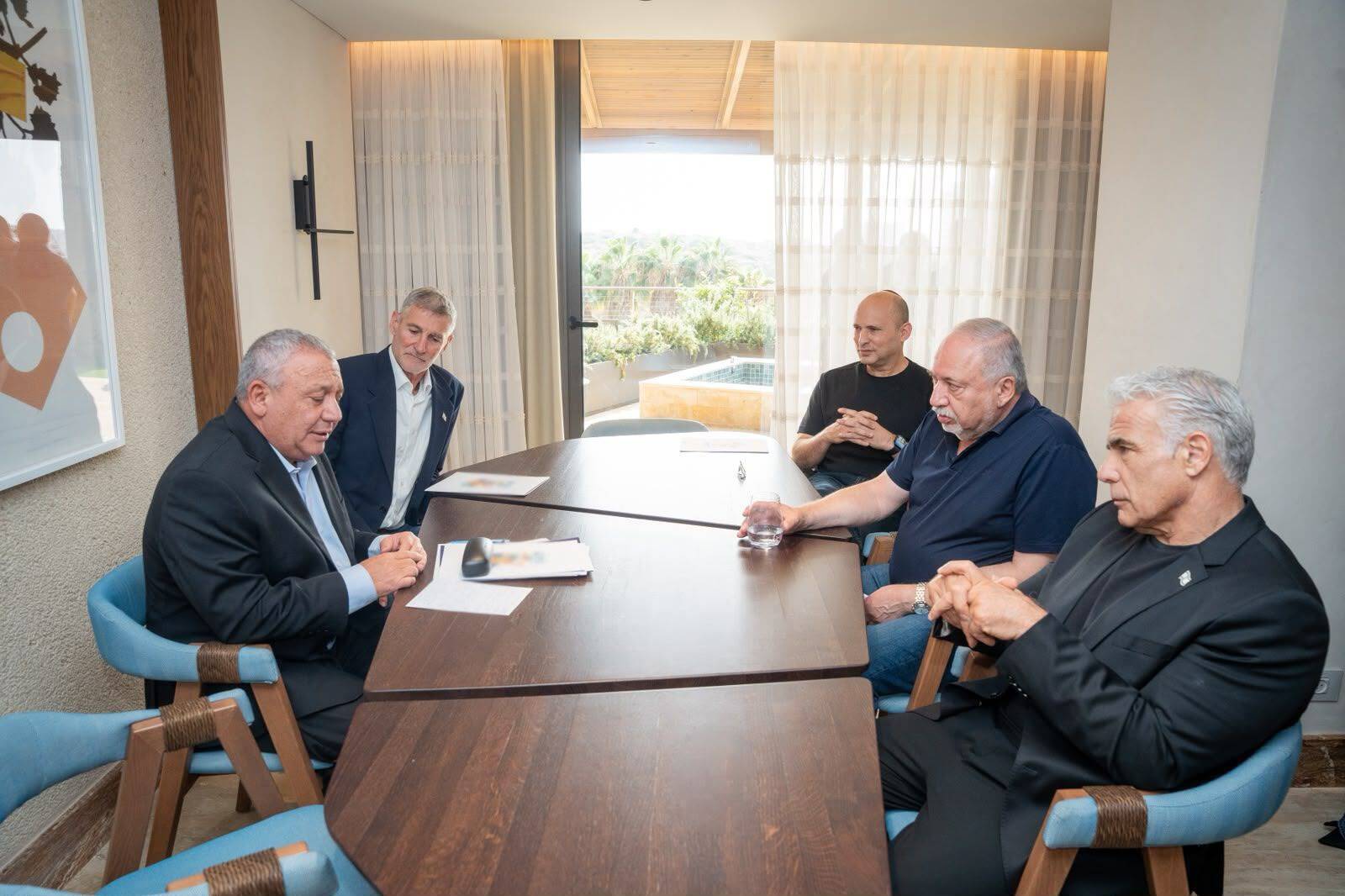
Even within the 47-member opposition block, early celebrations reign alongside complete chaos. Avigdor Lieberman is already rushing to announce that he will not sit in a government with Arabs nor with the Haredim. Members of the Democrats are shouting, “We won!” and pushing to build a government supported by the Arab parties. Meanwhile, Eisenkot and Naftali Bennett are searching through this chaotic reality for a winding path to fulfill their core promise: a government of change – without Netanyahu.
Israeli society must heal from the bleeding national trauma of Oct.7, 2023. But how can a society recover from a disease if it refuses to diagnose what caused it? Establishing an official State Commission of Inquiry is not an act of political retribution. Rather, it is, first and foremost, an essential tool for understanding failure, drawing vital lessons, and correcting our path for the future. This is a moral and national imperative of the highest order.
By the same token, drafting the Haredim into military service is not merely a long-overdue democratic, social, civic, and moral correction – alongside the critical operational necessity and acute manpower shortages in the IDF – it is the indispensable key to repairing the crumbling internal fabric of Israeli society.
Beyond our internal crises lies an issue rarely discussed within Israel, yet one that threatens to become our single greatest strategic danger: the growing international boycott and global isolation closing in around us. While our position in Washington may appear stable for now under the Trump administration, Israel faces grave trouble among the broader American public. Anti-Israel, anti-Zionist, and outright antisemitic demonstrations have turned into a global trend among young people, while Europe has already begun implementing practical steps toward boycotts. A new government freed from the debilitating grip of Netanyahu, Ben-Gvir, and Smotrich – could offer Israel renewed international credibility and desperately needed goodwill on the world stage.
These election results are not easy to digest, and they leave no room for illusions. The hard reality is that the residents of Jerusalem, our storied capital, no longer form a Zionist majority: Nearly 60 percent of the city is anti-Zionist (39 percent Arab, 29 percent Haredi). And it showed in the election results: In Jerusalem, 71.8% of the city’s residents voted for the Likud and right-wing bloc. Among them, 23.3% voted for an anti-Zionist ultra-Orthodox party whose rallies feature chants of “The Zionists are Nazis!” and whose spiritual leader, Rabbi Landau, previously stated that it would be better for the rule over the Land of Israel to be held by Arabs rather than Zionists. Wrap your mind around that figure: a quarter of the voters in Israel’s capital voted for a non-Zionist party!
The situation is difficult and complicated, but it requires a solution and a way out.
Navigating the political chaos and saving the country will require the leadership of the Change Bloc to demonstrate tactical maneuvering and political acrobatics right at the edge of possibility. Yet one truth must remain clear beyond any shadow of a doubt: a change of government is an existential imperative for the very future of the State of Israel.
It is a complicated, intricate situation fraught with immense challenges. How then, do we square the circle?”
On Tuesday, Nov. 11, at 4 p.m., the new Knesset will convene for its opening session. Unless dramatic, unexpected developments occur – and unless a war with Iran breaks out as Netanyahu hopes – the Speaker’s gavel will pass to the Change Bloc led by Gadi Eisenkot. Perhaps, just perhaps, a process will begin that can set Israel on a new path toward political and national recovery.
Granted, a week in Israeli politics is an eternity, and anything can still happen. Netanyahu is capable in a heartbeat of hinting to his Likud colleagues to declare that they do not recognize the election results at all, claiming that the Change Bloc’s majority is not “Zionist” and that the Arabs stole the vote. What will happen if Netanyahu’s bloc indeed decides to exercise a veto and rule that the election outcome is invalid because it was secured through the votes of Palestinian Arab citizens of Israel?
Therefore, in the fleeting time remaining before the Knesset convenes on Tuesday, the Change Bloc must immediately pull itself together and grasp the gravity of this hour. We cannot cling to hollow slogans about “unity” without fixing society’s core ailments, without forging true reconciliation, and without building a healthy civil society where all citizens share equal rights – and equal obligations. Israel must return to a democratic, liberal, Zionist, and pluralistic trajectory. In today’s Israeli reality, there is simply no alternative.
As the saying goes, politics offers no easy choices. Eisenkot and his partners must – and can – begin acting right from the opening session of the Knesset. They must elect a new Speaker of the Knesset, immediately vote to establish a State Commission of Inquiry, pass legislation limiting the prime minister’s tenure to two terms, and strip the Haredim and their Likud loyalists of the powerful Finance Committee. These decisive steps must be taken now – before the destructive right-wing tsunami arrives, threatening to bring absolute disaster upon the entire Zionist enterprise.
Dr. Ronni Shaked formerly led the Jerusalem bureau of the Shin Bet, and also served as the senior Palestinian affairs correspondent for Yedioth Ahronoth. He is a researcher at the Hebrew University of Jerusalem.


