
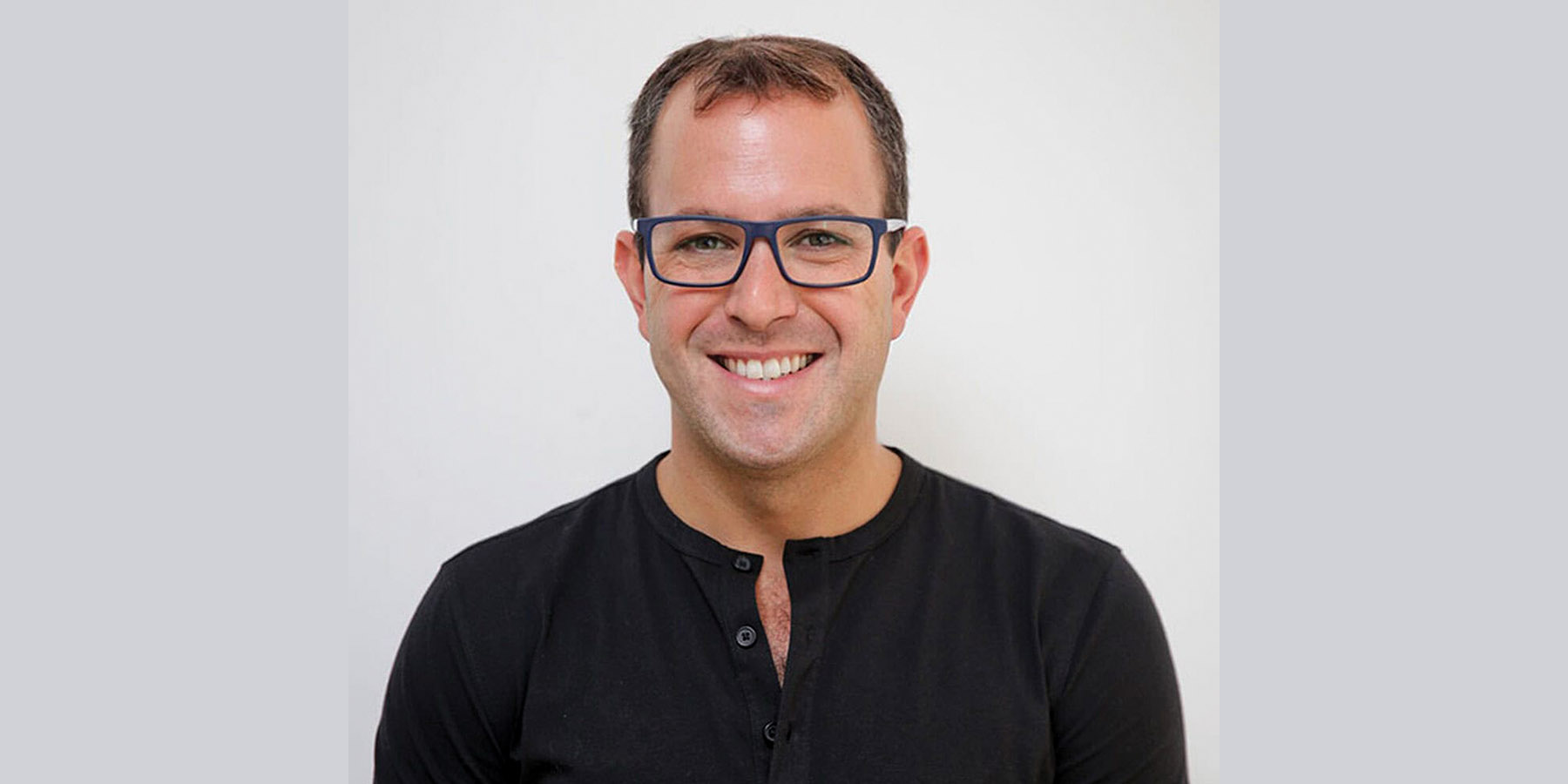
Aiming to reduce burnout and develop talent among Jewish educators, an international nonprofit is bringing a fellowship program to Boston starting this year.
M2: The Institute for Experiential Jewish Education has decided to include Boston among three locations for its 2025-27 Kehillot Community Fellowship cohorts, along with Toronto and the Greater Washington areas.
Shuki Taylor, founder and CEO of M2, said that experiential Jewish education is also called “informal Jewish education, happening outside formal settings.”
Worldwide, more than 3,500 Jewish educators have graduated from M2 professional development programs since its inception in 2016, according to the nonprofit’s strategic plan for 2024-28.
As Taylor explained, the organization has a different kind of approach, as well.
“You cannot build a profession based on charisma and creativity,” he said. “Both are subject to burnout.” Rather, he stresses “knowledge, skills and experiences, in order to professionalize the field.” This approach “keeps [educators] in the field far longer” and builds “a sense of professional identity,” Taylor said.
For each city, the foundation will select 25 mid-career Jewish educators, for a total of 75 members. Applicants must have between five and 10 years of experience in their field. The program is open to applicants from the Greater Boston area as well as Boston itself.
Applicants might be “working with young adults in organizations like Moishe House [or] OneTable,” Taylor said, “or with communities such as federations and JCCs … or youth movements like BBYO [or] NCSY.”
“We try to identify who are the most promising professionals,” he said. “We and the community are very involved.”
National and local organizations are providing funding for the fellowships. Funders – and partners – for the Boston cohort include Combined Jewish Philanthropies of Greater Boston and the Beker Foundation.
Brett Lubarsky, director of Jewish communal life at CJP, participated in a previous M2 Foundation initiative, the Senior Education Cohort. Now he’s looking forward to helping CJP partner with M2 to bring the Kehillot Community Fellowship to Boston.
Lubarsky saluted the chance “to increase the opportunities available for Jewish educators and emerging professionals … putting theory into practice, deepening the opportunities available to them.”
Asked about his own experiences as part of an M2 cohort, he said that it “fundamentally changed the trajectory of my career … it connected me with a network of colleagues from around the country, some of whom did similar work and some doing very different work.
“It was an investment in me as a young educator, to be able to clarify my vision and message as an education professional. It made me understand more deeply what my ‘why’ was.”
Those selected for the 18-month Kehillot Community Fellowship will participate in seminars in their cohort location, as well as in the other two cohort cities.
Taylor said that the programming is intended to foster an understanding of “Jewish communal life, the dynamics and potential of [the participants’] own communities, all the while learning different tools on how to become better professionals.”
An Israeli citizen, Taylor is trained in informal Jewish education, having worked with terror victims in the early 2000s and with at-risk youth. He then worked at Yeshiva University before founding M2 almost nine years ago.
He said Israel has much to offer when it comes to experiential education – “bringing people to Israel, bringing Israel to people, experiencing it not just as an idea, but what it represents, its culture, its people. … There’s no greater outlet than experiential education. There are so many great travel programs to feel, taste, connect, grapple with.”
Taylor recalls his thoughts upon first learning about informal Jewish education: “I knew I wanted to do this professionally, but there was no clear career path or graduate programs to get you training. … It was a transient field.”
Now he hopes to change that, including through the Kehillot Community Fellowship coming to Boston.
“We have found it is a community ready for investment and innovation, and thinking long-term,” Taylor said. Θ


